VESTIGES
The Human Body: Anatomy before the machine
The Human Body: Anatomy before the machine
Verfügbarkeit für Abholungen konnte nicht geladen werden
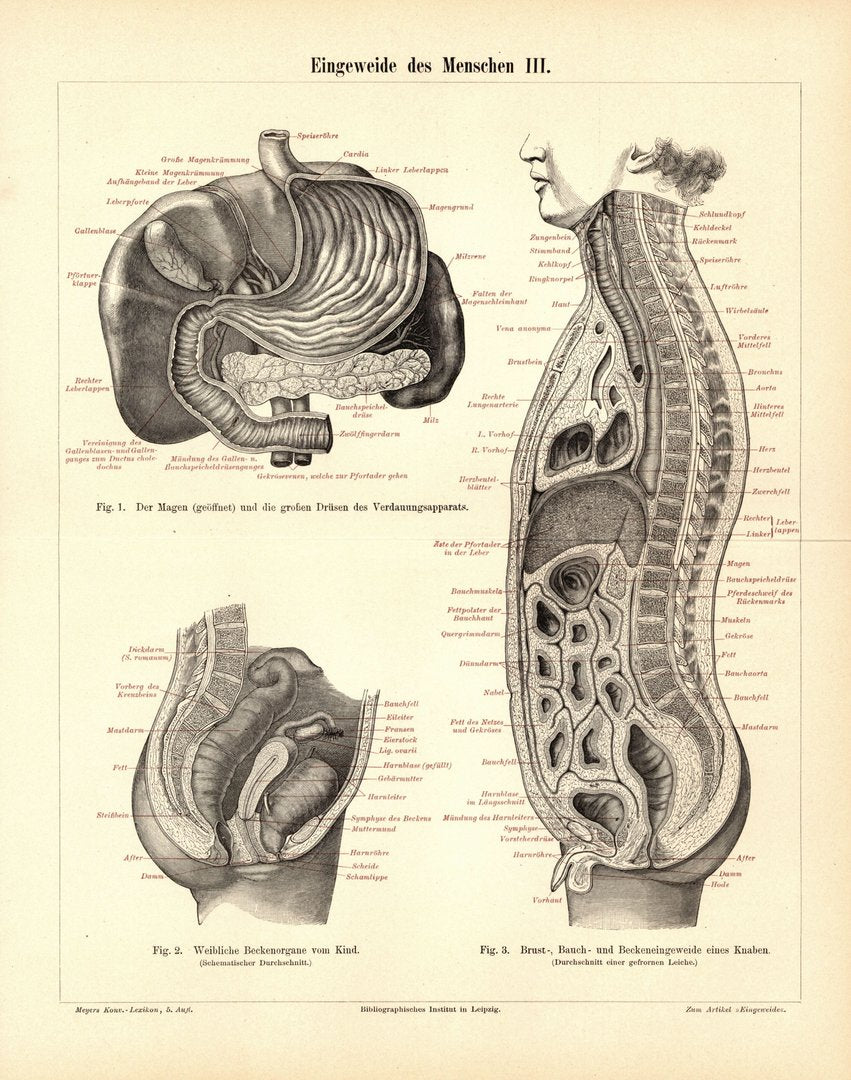
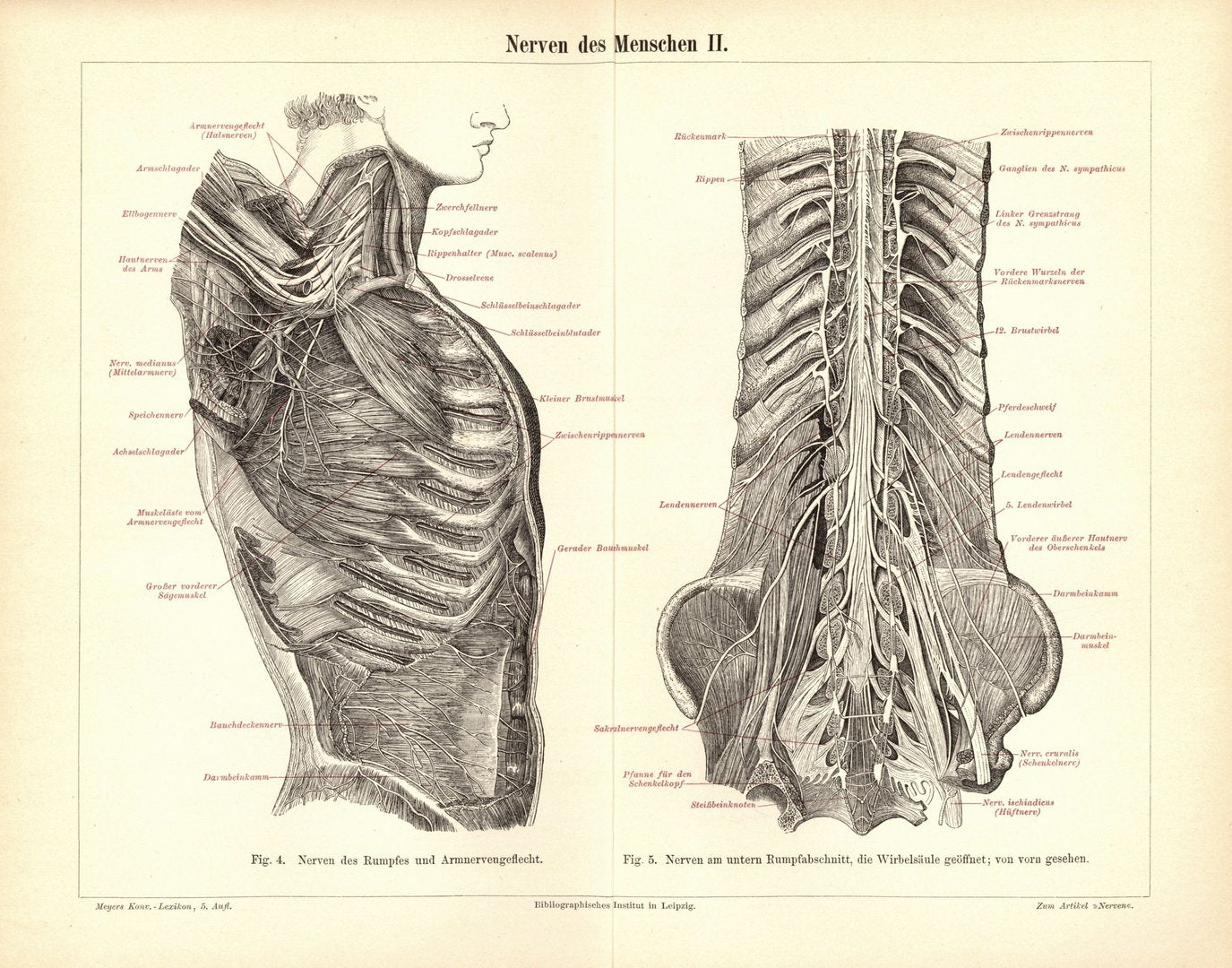
Before the advent of radiology and digital imaging, the essence of the human being could only be revealed through direct observation and the mastery of the hand-drawn line. This collection of German lithographs from the turn of the century documents the human body not merely as a biological specimen, but as the Pinnacle of Creation. Through precise strokes that map the labyrinth of veins, the pulse of arteries, and the delicate web of nerves, these works capture the complexity of our physical existence. This archive invites the viewer to contemplate the divine engineering of life, preserved on paper with a clarity and soul that modern technology often simplifies.
Consisting of 6 original prints:
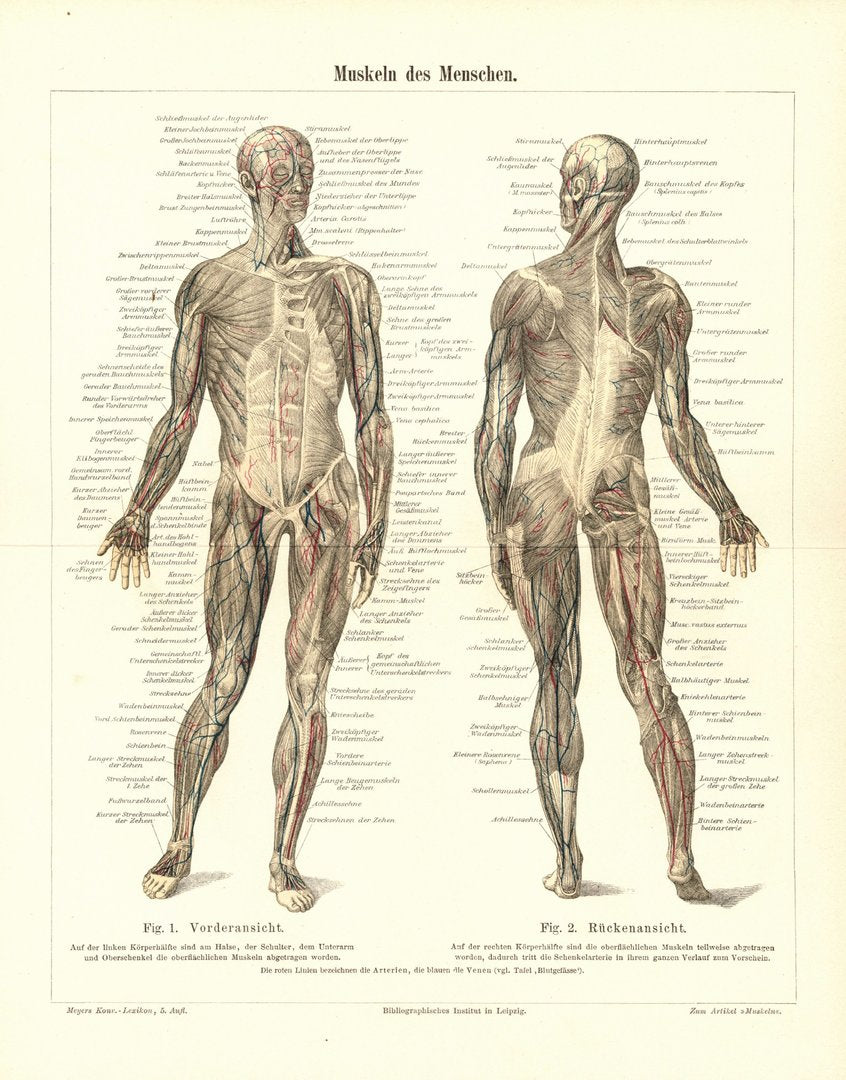
- Title: Muskeln des Menschen (Human Muscles)
Medium: Lithography, color
Origin: Germany, 1897, Authentic Period Print (no digital reproduction)
Size: approx. 31 x 25 cm
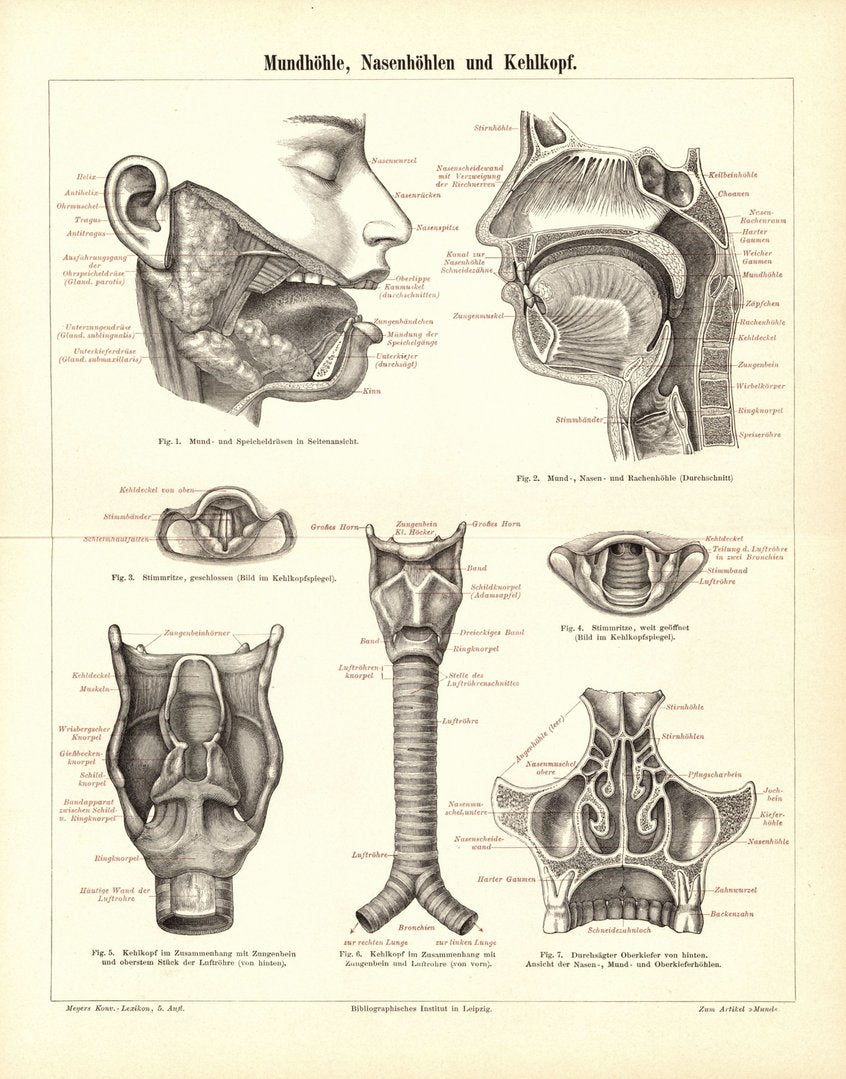
- Title: Mundhöhle, Nasenhöhlen und Kehlkopf (Oral cavity, nasal cavities and larynx)
Medium: Steel Engraving, b/w
Origin: Germany, 1897, Authentic Period Print (no digital reproduction)
Size: approx. 31 x 25 cm
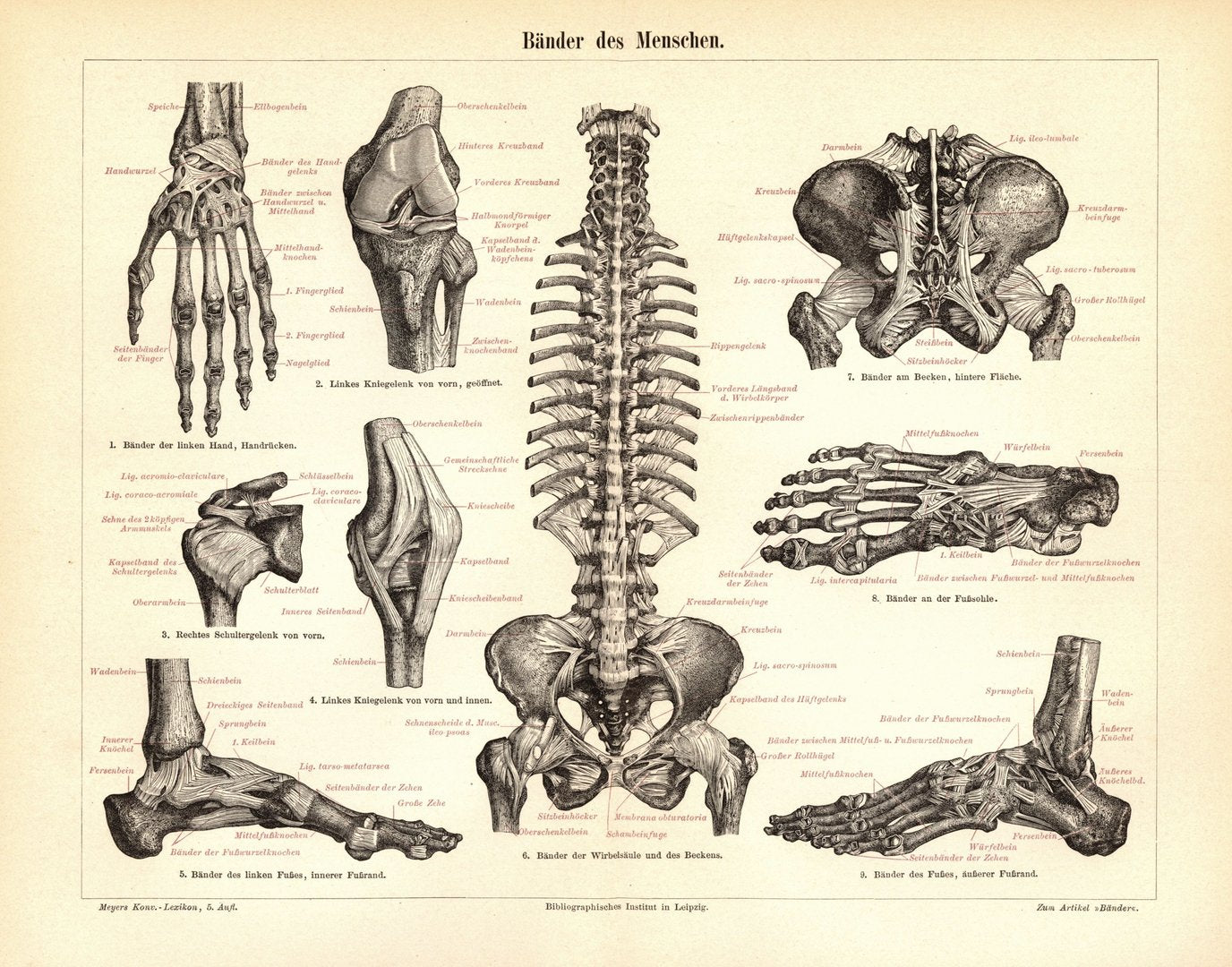
- Title: Bänder des Menschen (Human ligaments)
Medium: Steel Engraving, b/w
Origin: Germany, 1893, Authentic Period Print (no digital reproduction)
Size: approx. 31 x 25 cm
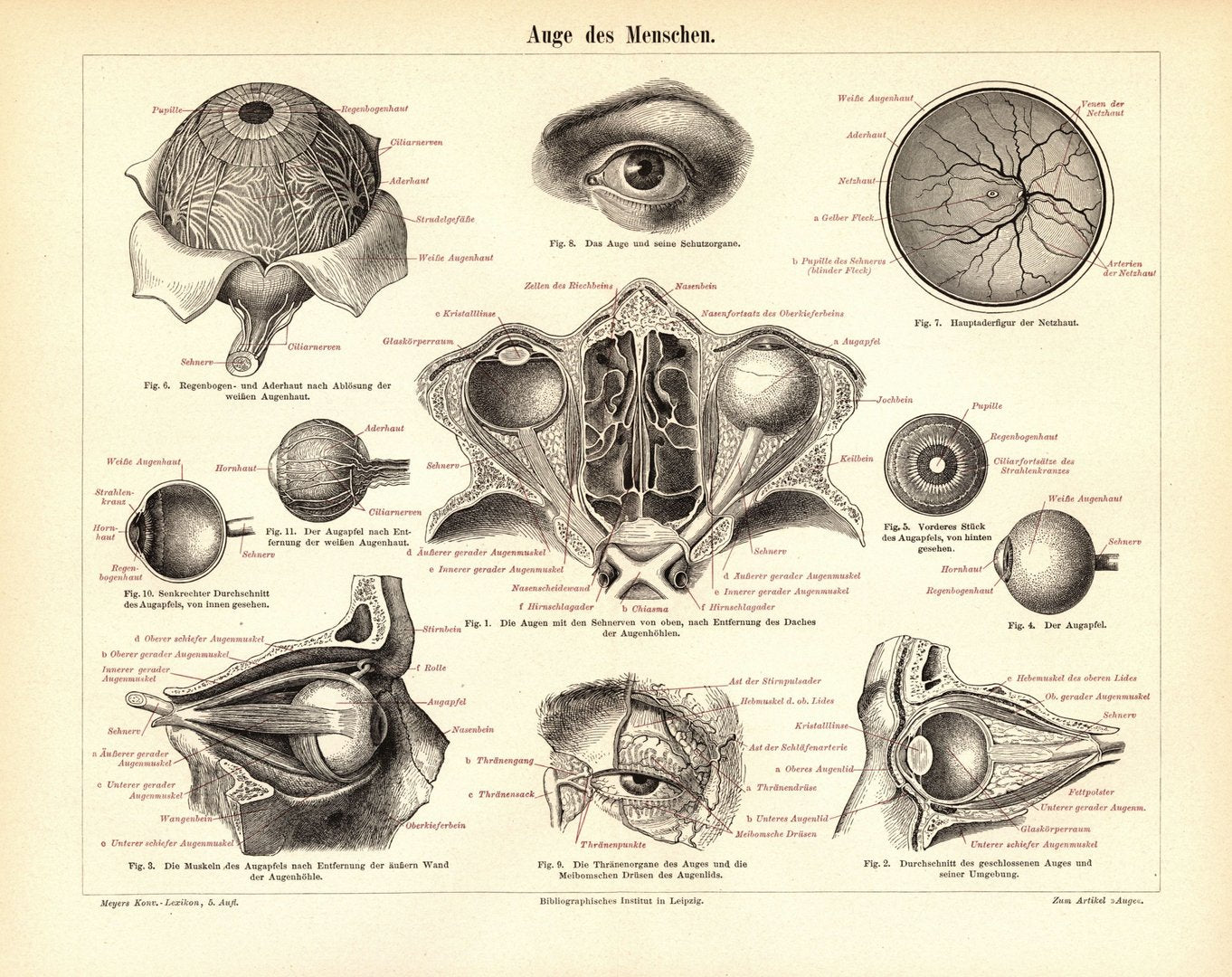
- Title: Auge des Menschen (Human Eye)
Medium: Steel Engraving, b/w
Origin: Germany, 1893, Authentic Period Print (no digital reproduction)
Size: approx. 31 x 25 cm - Title: Eingeweide des Menschen (Human intestines)
Medium: Steel Engraving, b/w
Origin: Germany, 1895, Authentic Period Print (no digital reproduction)
Size: approx. 31 x 25 cm
- Title: Nerven des Menschen (Human nerves)
Medium: Steel Engraving, b/w
Origin: Germany, 1897, Authentic Period Print (no digital reproduction)
Size: approx. 31 x 25 cm
The Archive Statement: Rarity and Condition
Provenance & Survival Due to the fragile nature of 19th-century paper and the significant historical upheavals of the early 20th century across Central Europe, the survival rate of these editions is low. While originally produced for scientific distribution, it is estimated that less than ten percent of the original printing remains extant today. Each surviving specimen is a rare, physical fragment of European scientific history.
A Note on Conservation and Patina Despite rigorous preservation efforts, specimens from the 1880–1930 era may exhibit minor foxing (natural age-toning), softening of the paper edges, or subtle ink variations. In the context of the The Human Body: Anatomy before the machine, these are not considered defects or signs of diminished quality. Rather, they are the patina of time—authentic markers of the print's hundred-year journey. These characteristics confirm the physicality of the medium and distinguish the historical artifact from modern, characterless reproductions. To possess a print with such markings is to hold a document that has survived more than a century of history.
Share